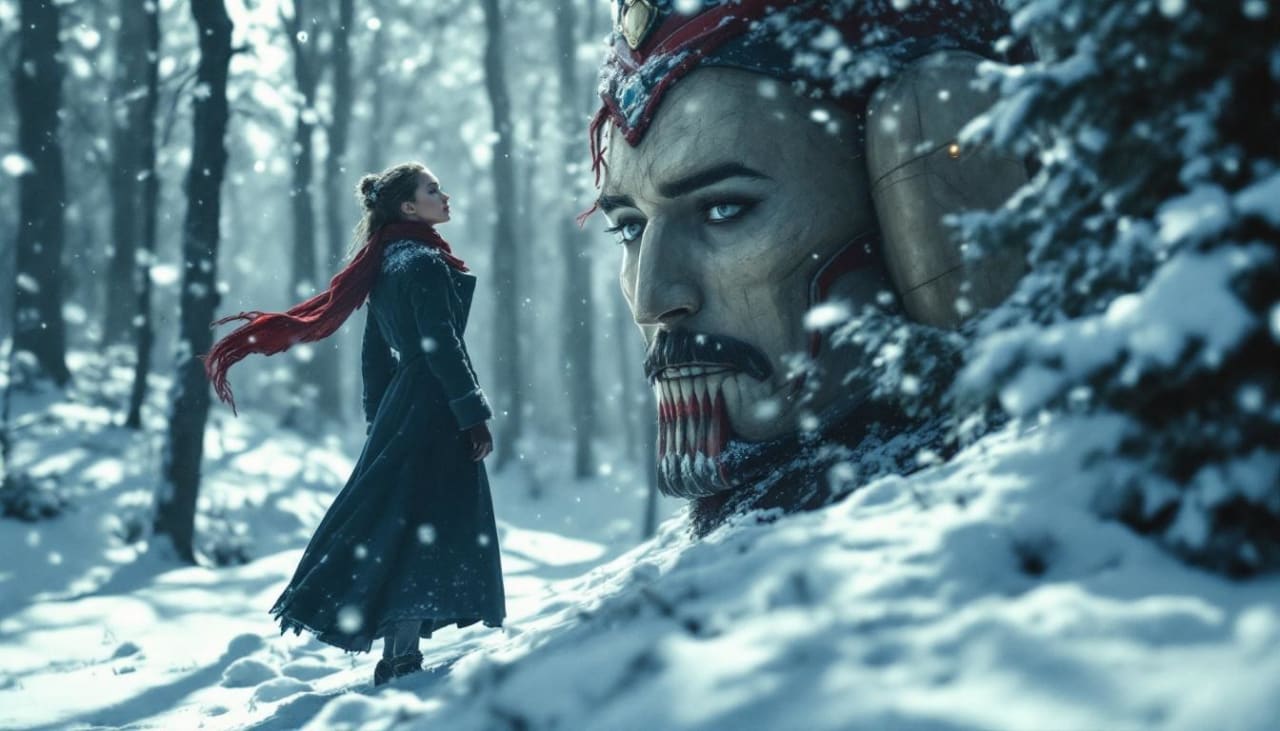

Lately, I've found myself stepping through life with an eye peeled for hidden meanings. It's as if my world unfolds in stories, shadows of ancient myths casting light on our paths. These aren't just yarns spun in the past–they persist in our present. Everywhere I look, from the silver screen to the stadium, the proscenium arch to the evening newscast, echoes of timeless archetypes persist, shaping the narrative of our contemporary world.
The other day, as I watched my kids perform in 'The Nutcracker', my mind lingered on these thoughts. The ballet is a beloved holiday tradition–the sweeping Tchaikovsky score, the ethereal grace of the dancers, and the whimsical tapestry of its story. It tells of Clara, who receives a nutcracker doll for Christmas and discovers that it’s not just a toy. It springs to life, defeats the sinister Mouse King, and takes her on an adventure through the enchanting Land of Sweets. What's not to love?
Yet amid the twinkling lights and graceful movements, a question gnawed at me: Why do we continue to watch this ballet, over 130 years after its premiere? Debuting in 1892, 'The Nutcracker' has become an indelible part of our holiday fabric. There must be something more here, hidden beneath the brightly colored veneer.
Things that last, endure the test of time, often speak to some deep truth recognizable on a subconscious level. 'The Nutcracker' is no different. It whispers an essential truth about imagination as our lifeline. Emerging from an era dominated by Rationalism–a time when society revered cold, hard facts over the miraculous and mysterious–its story offers a subversive message wrapped tidily within the joyous pageantry of Christmas and the irresistible allure of confectionery fantasy.
As Clara drifts into a dream, we see an unlikely hero–the humble nutcracker–not just fight evil, but triumph over chaos itself, embodied by the menacing Mouse King. Through this battle, Clara unlocks a realm of pure delight, overseen by the Sugar Plum Fairy. She isn't merely entertained by these visions, but returns transformed, having savored the profound adventure made possible by the boundless imagination of childhood.
We return to this tale every holiday season because, deep within our own December reveries, we're reminding ourselves of something crucial: the value of childlike wonder. Not everything of true substance can be quantified, seen, or measured. The land of magic we long for as children still resides somewhere inside us–it's a matter of remembering where to look.
And so, as we plunge into the tempests and still pools of another holiday season, we're plunged deeper into a world rich with symbols–Santa Claus, twinkling lights, and evergreen trees. In our cynical moments, it's tempting to dismiss these as mere frivolity, clever marketing ploys in an ever-commercial age. But I challenge you: such stories don't endure by happenstance. We're the keepers of this flame, perpetuating them for reasons deeper than surface gloss would suggest.
The Nutcracker concludes, with its orchestral swells and flourishes, sending us forth into the world renewed, a spyglass held to the enigmas of life. It tells us not merely to see, but to perceive; to perceive not just depth, but the heart of mystery itself.
This holiday season, when the nights stretch long and the fires draw our families close, look a little deeper. Seek out the hidden codes in the traditions that draw us back year after year. You might discover messages more profound and meaningful than ever imagined–not planted by cunning marketers, but etched into our cultural DNA, speaking truths as old as time itself.
Embrace these myths with fresh eyes. Let them guide you, not just as tales from yore, but as scripts for the journeys within. Who knows what legends you might help to craft next? For in these stories, there lies the thrill of discovery, a chance not just to reimagine old tales, but to live out a future sung in a new harmony–one where imagination and wonder lead the way.