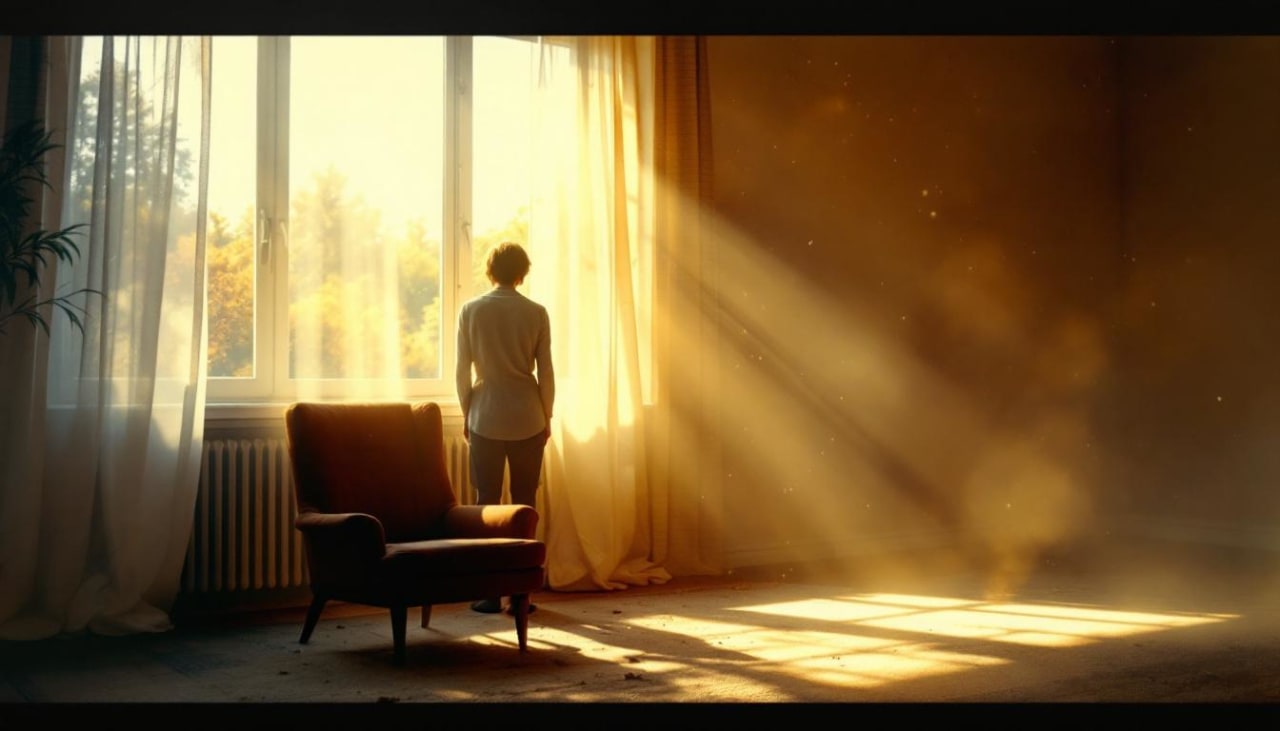

The house feels like a place someone left the lights on, then walked out without a word. Not in the slapdash way of someone forgetting, in the slow, decisive silence of a room that once hummed and now rests. That quiet is not empty. It is full of memory and constancy. It is a pressure, an ache. It is the sense that a place in my heart has suddenly gone quiet.
When my father died twenty-five years ago I moved like a man trying to outrun a storm. Within a year I had changed my address, my work, and my bed. I let new love rush in because moving, starting, loving all felt like antiseptics. It made the wound sting less. It made me feel alive. At the time it was the way I knew how to survive.
Losing my mother, Laura, was different. We watched her body bow out slowly. Her mind carried the weather for years before the final snow. Watching someone you love decline is a strange sort of pre-grief. You begin to inventory loss in increments. You hold your breath at each little theft: a joke that lands flat, a day she slept through, a memory she could not find. When the end finally came, the finality was no surprise. Yet the absence landed with a stillness that feels uncanny. Where before there was movement, there is hush. Where there was a force of nature, there is a field waiting to be sown.
I am not in a hurry to fill that field. Not because I do not want life to continue. I do. But because whatever comes in will need to be worthy of the space she occupied. Saying no to quick fixes is not noble fragility. It is an act of loyalty.
What fills the void after someone monumental is gone? There is no single answer. There are patterns, traps, opportunities, and practices. There is also the slow, unglamorous work of living into the truth that grief is not a problem to solve but a landscape to learn. Below is the map I am sketching for myself. It is practical, it holds mythic truth, and it tries to be honest about the human costs and the gifts that arrive if we do not rush.
The nature of the void
When someone you love dies you experience a defeat of expectations. A steady frequency that once informed your life goes silent. Your nervous system, used to certain cues and rhythms, searches. It tries to pull the missing signal into place. That search feels like emptiness.
On a biological level grief alters your brain. The amygdala, the part that registers threat, becomes more active. The default mode network, the region tied to self-reflective thought, changes its pattern. Your hormones change. It is not only emotional. It is physiological. You might find yourself sleepless, hungry, or exhausted without reason. That is normal. There is no shortcut around it.
On a psychological level the void is also an identity problem. A person’s presence often defines roles we inhabit: the soundboard, the critic, the comfort, the reprimand. When that person is gone, a part of the scaffolding that held your identity can wobble. Who am I now, when I no longer have to explain my choices to the woman who would call them out or bless them? Who do I become when routine conversations vanish?
Finally, the void is existential. Love is one of the ways meaning organizes itself. Remove it and you are left with strange architecture. The rooms remain, but their purpose is in question. That makes us anxious. It makes us reach.
Past responses, the quick fill
We are creatures that want closure, and we are particularly bad at tolerating uncertainty. After my father’s death I moved fast because motion numbs. Motion promises narrative. If you change jobs and cities you can tell a story: grief, then reinvention, then new life. The story is soothing. It is also a dodge. There is relief in replacing one anchor with another because it keeps the interior from being examined.
Love is a tempting antidote. It is luminous and immediate. It soothes raw nerves and temporarily reorients your sense of belonging. But if you use love as anesthetic you risk investing in something to quiet your ragged edges rather than to nourish an honest partnership. I do not regret the choices I made after my father died. They were how I survived. But survival and integration are different things. Survival is a sprint. Integration is a pilgrimage.
A different approach
Now I am older. I have less appetite for quick fixes. I have learned a few hard lessons about projects that looked like salvation but were just distractions. Slower is not safer. Slower is more discerning. My life is not a desert to be filled with bottles of water. It is a landscape with contours, cliffs, rivers, quiet fields, that ask for tending.
This is not refusal. I am open to what will enter my life. But I have changed the terms. I will not let anything replace my mother by default. That is disrespectful to her memory and dishonest to whatever might come afterwards. Instead I am practicing what I call sacred waiting. It is not passive. It is an active, disciplined form of attention. Sacred waiting is saying yes to honoring what is, while holding a clear intention for what can enter.
Honoring the monumental
My mother was monumental. Brave in ways that looked ordinary from the outside, fierce in love, unafraid to be small and big at once. She did not need anyone’s permission to be herself. Her presence taught me something about proportion and clarity. To replace that with something small or trivial would be an insult. Not to her memory only, but to the depth of what she modeled.
That does not mean I expect perfection from what may come. Monumental does not mean flawless. It means worthy of the space. It means something with gravity. Think of it as a chair at a table. Some chairs are meant for passing guests. Some chairs are meant for elders. The chair that takes my mother’s place must be one that can shoulder history, can make room for contradictions, and can keep the lights on when the rest of us are tired.
How do you recognize something worthy? There are practical tests. They are slow and boring, but they work.
- Time test. Does this person or project persist beyond the honeymoon? Does it show up on a bad day? Monumental things have staying power.
- Depth test. Can you have real, awkward conversations with this person? Do they ask hard questions and hold you afterward? Monumental relationships tolerate your shadow.
- Contribution test. Does this thing compel you to be better? Not because it criticizes you, but because it aligns with a larger practice of integrity.
- Presence test. Is this connection present when it matters? Monumental people show up without fanfare. They are consistent.
If what appears in your life passes these tests slowly, then it can be welcomed. If it fails, send it on its way respectfully. You do not need to be cruel. You only need to be honest.
The cycles of life
Loss is both an ending and a threshold. Joseph Campbell wrote about the hero’s journey as a sequence of call, descent, trial, and return. Death of a loved one is a call to a new interior expedition. The descent follows. We are changed. What returns is never the same. That is how life is. It is not a gentle logic where something cannot begin until something else has ended. It is messier. Sometimes new things begin before old are fully ended. Sometimes new things remain small until old ones dissolve enough room.
My faith in cycles comes not from comfort but from example. Societies have always ritualized transition because we are not good at holding liminal states alone. Rites give structure. Modern life strips most rites away. Grief becomes privatized and performative. We check boxes instead of attending thresholds. That is why the space between the ending and the beginning deserves tending.
Embrace the space
There is a temptation to fill the emptiness because emptiness is loud. It pushes you forward with urgency. Emptiness wants a narrative and it wants it now. But the space itself is generative. It is where you can plant new roots that differ from simply transplanting an old tree.
Here are practices I am using and recommending because they are practical and because they guard against meaninglessness.
- Ritual and routine. Grief is a storm. Routines are the shore. Keep basic things steady: sleep, movement, food. Ritualize remembrance. Light a candle at the same time each week. Write a letter to your mother every month. Create small acts that anchor you.
- Somatic attention. Feelings live in the body. When loss hits, there is an urge to intellectualize grief. Instead, pay attention to breath and posture. Try a five minute body scan daily. Move in ways that are honest. Walk. Lift. Breathe with the intent to name sensations rather than judge them.
- Shadow inventory. Why do you feel a push to fill the void? Are you avoiding