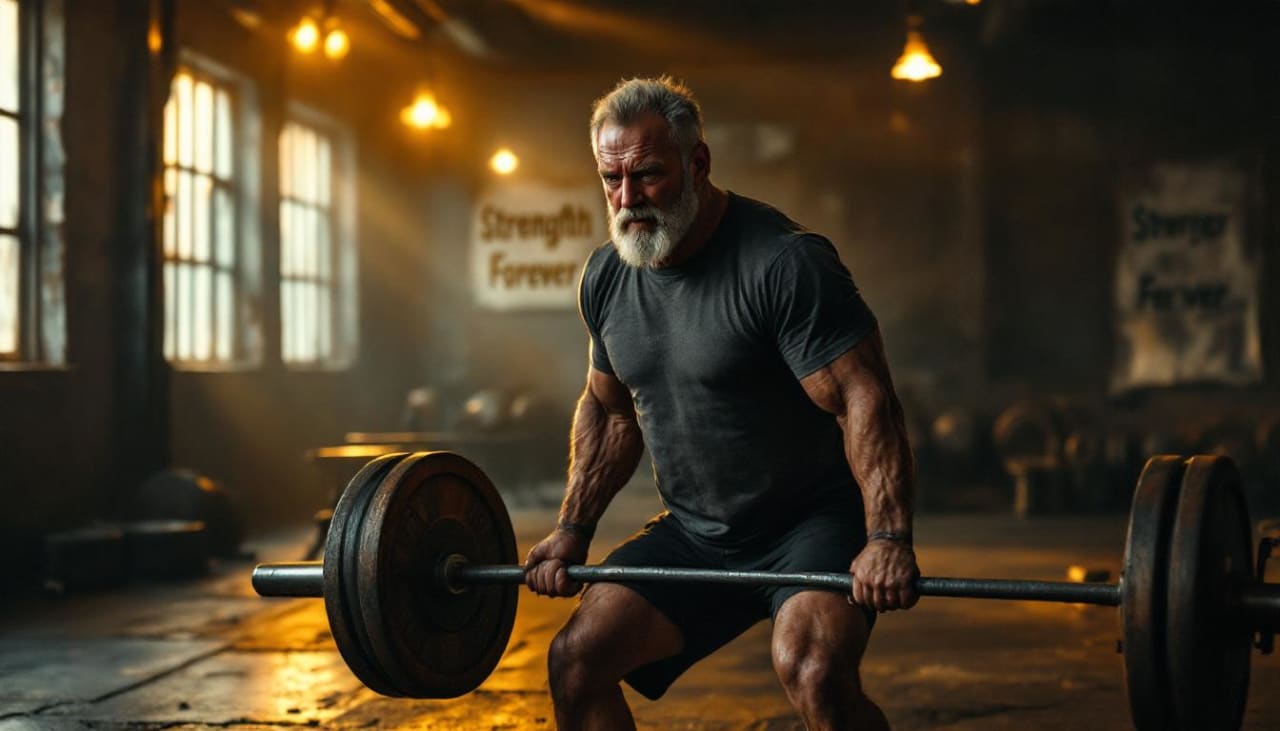

The tweet was simple and true. “The gym teaches you something most men never learn. Progress comes slowly. You lift a little more weight. Run a little farther. Push a little harder. Repeat for years. Then suddenly people call you ‘talented.’” – @PathToManliness
If you need a map for what it looks like to become a man who matters in a chaotic age, start at the squat rack. The iron does not lie. It is patient. It demands that you show up before inspiration arrives, and it rewards the man who learns to make long boring work into ritual. This is not about aesthetics or social media clout. It is about a way of being that rewires your nervous system, your identity, and your story. It is the Hero’s Journey in physical form.
The Hero’s Journey has been used to describe mythic quests, movies, and dramatic life changes. But it is rarely applied to the single most reliable classroom for disciplined transformation: the gym. Here you answer a call to adventure through small, gritty reps. Here you meet your shadow in the mirror between sets. Here you build physiological sovereignty, the bodily authority that keeps you steady when careers collapse, relationships fray, and AI reshapes work. And here, if you stay long enough, you become quiet competence personified, someone whose presence reads as talent because he has paid the price in slow, patient labor.
This is for men who feel something softening inside them as they watch technology outpace meaning. It is for the midlife man who wakes up to a plateau that feels more like a trap, for the man who has been told to pivot, reskill, optimize. The gym gives you an answer that no algorithm can: do the work that humans have always done to become whole.
The Call to Adventure: Beginning with Small, Gritty Reps
A call to adventure rarely arrives with trumpets. It arrives as a niggle in the ribs. Your shirt fits differently. You get winded on a flight of stairs. You look in the mirror and see a smaller man than you remember. The call is an annoyance, a sense that something can be reclaimed. You can scroll your way out of that feeling, or you can step into the gym.
In myth the hero refuses at first, then accepts. In the gym you accept from the start or you stay stalled. Acceptance here means showing up on cold mornings, not because you want transformation today but because you respect the process. A single rep done with attention is a small heroism. A set completed when you do not feel like it is a heartening refusal to be ruled by mood. Ten years of those tiny refusals add up to a life.
The trick is to love the process when the results are invisible. The beginner’s gains are intoxicating, but after that point progress slows. That is where most men quit. They expect life to mirror the first three months of lifting. Instead, it asks for stubbornness. The man who endures learns to measure success differently. He tracks consistency, not short-term wins. He values recovery, sleep, and patience. He stakes identity on showing up rather than on praise.
This is the gym’s first lesson in heroic life. The call to adventure is not dramatic. It is a daily grind. Answering it with small, gritty reps disciplines willpower and creates an inner promise: "I will be the man who follows through." Your body will obey that promise in ways your profession and your environment cannot.
Trials and Shadows: Persistence as a Path to Wholeness
Training forces you to meet limits you did not know you had. Your legs tremble under a bar you once thought light. You taste bile in your mouth at the end of a brutal set. Pain is a blunt teacher. It points to fear, shame, laziness, pride. Those inner voices you avoid in therapy show up in the gym. The same man who avoids confrontation in life will avoid adding plates in the gym because he fears failure.
This is shadow work dressed in sweat. Carl Jung said the shadow contains what we refuse to accept about ourselves. In the gym, the shadow is palpable. You face it with each attempt to lift more, run further, push harder. You learn where your anger sits when you fail. You learn how grief shows up as lack of energy. You find the parts of yourself that escape responsibility through perfectionism or self-sabotage.
Persistence is the path to integrating those shadows. When you persist through a hard month, you do more than build muscle. You build character architecture that holds emotions in a new way. You practice returning to the barbell after humiliation. You practice patience with slow progress. You get used to discomfort and you stop reacting to it with avoidance.
Consider Dan, 49. He left a corporate role when AI automation collapsed his team. He moved to consulting, then to driving for extra income, his confidence hollowed out. He joined a gym because he needed a place to be competent. In the gym he found small wins, better posture, heavier deadlifts. In front of the mirror he confronted an old belief: once you lose status you are nothing. He also met anger he had never expressed, vestiges of a father who defined him only by achievement. The gym became a place to practice owning that anger without aggression, to transform it into focus rather than resentment.
Or take Marco, who at 42 realized his marriage had trapped him in a false identity. The gym was the one space where he could feel strong on his own terms. Weightlifting pulled his attention from external definitions of worth. It forced him to see how much of his life he outsourced to validation. When he began to lift heavier, he began to reclaim decisions: how to speak, when to set boundaries, how to grieve. The training brought his shadow out into the light where it could be worked with. Not by talking about it endlessly, but by repeatedly choosing discipline over drift.
This is not therapy in the clinical sense, and it is not a bypass. It is active integration. The body remembers what the mind prefers to forget. By moving through physical trials, you learn to move through emotional trials. The gym gives you practice at being honest with your limits and then enlarging them. This repeated honesty softens shame. It teaches courage.
Building Emotional Mastery and Redefining Masculine Strength
Masculinity has been simplified into rough caricatures. Stoicism without feeling is brittle. Sensitivity without backbone is lost. The gym, paradoxically, cultivates both. It is a controlled environment in which anger, fear, shame, and joy are all valid responses. The man who lifts learns to hold these emotions without being ruled by them.
Emotional mastery begins with the breath between sets. Learn to name what you feel after a bad set: disappointment, annoyance, doubt. Name it without rehearsal. Then return to the work. That simple circuit trains the nervous system to notice emotion and act anyway. Over time you will notice that you no longer need to swallow feelings or perform them. You begin to have them and then decide what to do.
Physical discipline also reshapes how you show up in conflict. A man who has trained his body knows how to steady himself in adversity. He does not need to dominate to be powerful. Power becomes quiet competence. It is a refusal to be tossed by other people’s chaos. He moves with intent rather than reflex. He speaks with fewer words because he has fewer reasons to prove himself.
There is a moral contour here. Strength without humility becomes tyranny. Humility without strength becomes victimhood. The gym offers a middle path. When you learn to fail at a set and then to try again, you cultivate humility. When you learn to push through a hard workout with discipline, you cultivate strength. The integration of those two builds a new masculine ethic: presence under pressure.
This is also a blueprint for raising the next generation. Boys who see a man train with discipline and tenderness learn that strength includes tenderness. Men who practice emotional clarity around training become better partners, fathers, and leaders. The gym becomes an incubator for a masculinity that can navigate modern life—one that is capable of tenderness, yet unafraid of confrontation when needed.
Ascending to Physiological Sovereignty
Physiological sovereignty is the idea that your body is your operating system. When it is tuned, your mind is sharper, your patience is greater, and your choices are clearer. You cannot outsource sleep or recovery to AI. No machine can inhabit your breath or recalibrate your nervous system. Rebuilding bodily authority is therefore the most strategic thing you can do in an era of rapid technological upheaval.
The gym is a central pillar. But sovereignty also includes sleep hygiene, nutrition, breathwork, and modest fasting. These practices are not aesthetic rituals. They are tools to command the physiology that governs decision making.
Start with the habit stack. When you show up to the gym, you trigger a cascade: better sleep follows lifting heavy three times a week, better sleep improves cognitive clarity, clarity improves decision making at work. Small habits compound. Habit formation here is aggressively simple. Train at consistent times. Build recovery into your schedule. Track sleep and treat it like a non-negotiable meeting.
Breathwork is an underused lever. A man who can slow his breath under stress controls his sympathetic nervous system. That is a practical skill when a company meeting becomes a test of your resolve or when AI threatens your role. The box breath, the simple practice of slowing inhale